
Imagine a shopper comparing two backpacks. Both cost about the same. One product page lists fabric and dimensions. The other shows the bag under an airplane seat and includes a review from someone who packed it for a weekend away. The second page helps the shopper answer a question the first leaves open. Will this actually work for my trip?
Marketing psychology triggers are cues that can influence what people notice, how they evaluate an offer, and when they feel ready to act. A review can reduce uncertainty. A comparison can make a price easier to judge. A genuine deadline can help someone decide when to place an order. The same cue can fall flat when it addresses a concern the customer never had.
I explore these ideas in “Impulse Buying Psychology: Trigger Points That Make People Buy,” the first book in my seven book “Impulse Buying Psychology” series. When you apply marketing psychology triggers, start with a specific question your customer has. You’ll have a better idea of what to change and what to measure.
Social and Group Influences
Social Proof
A customer deciding whether to buy boots online may care more about how they fit than how many pairs you’ve sold. A review that says the boots fit comfortably over thick socks gives that shopper something to work with. Use review management software to tag genuine feedback by concern, then place relevant reviews near the size selector, delivery estimate, or other point of decision.
Liking
People can be more receptive to someone they find relatable. Picture a sewing instructor showing the crooked seam on her first project before explaining how she fixed it. A beginner can imagine learning from her. When you film a product demo, let the presenter use their own words and answer a real customer question. Try that clip beside your usual polished introduction.
Belonging and Identity
Some marketing psychology triggers speak to how people see themselves and the groups they want to join. A cycling club can show a first ride with a slow pace, a coffee stop, and people wearing ordinary clothes. That gives a nervous beginner a clearer sense of who belongs there. Use audience surveys to learn how customers describe themselves before you write community focused copy.
FOMO
Fear of missing out is the concern that you’ll miss an experience other people are enjoying or expect to enjoy. A pottery studio could show what participants made at its last workshop and state the date of the next session. Give readers enough detail to decide whether they’d enjoy it themselves. Use an email marketing tool to invite people who signed up for workshop updates.
Authority
Authority comes from expertise that matters to the decision. When someone shops for climbing shoes, an experienced fitter can explain where a snug fit helps and where pressure becomes a problem. Name the expert, explain their relevant experience, and show how they reached their recommendation. Of the marketing psychology triggers you can use on a technical product page, this one depends particularly on whose judgment you feature.
Emotional Contagion
In groups, people can pick up on one another’s emotions through expressions, voices, and behavior. A cooking class video might capture the laugh that follows someone’s first successful pancake flip. That moment gives viewers a feel for the room. Use video editing software to preserve the interaction and its sound. Compare the clip with a product montage if you want to test which earns more trial bookings.
Cognitive and Perception Influences
Anchoring
An initial number can shape how people judge the numbers that follow. If your pricing page opens with an annual plan, visitors may use that figure as their reference when they see the monthly option. Present both billing periods clearly and show the total due. Use a landing page testing tool to check whether a different order changes plan selection and customers’ understanding of the price.
Contrast Effect
Contrast changes how an option looks when you put another option beside it. A 45 minute delivery window may feel narrow next to a four hour window. Put both options in the same format and explain any price difference. Marketing psychology triggers such as contrast are easiest to test when you keep the offer itself fixed and change how customers see the comparison.
Curiosity Gap
Curiosity can arise when people know enough to recognize a gap in their knowledge. An email subject such as “Where customers pause on a pricing page” gives readers a specific question to answer. Show the finding early in the email and explain what it means. Track clicks to the full analysis or replies from interested readers alongside opens so you can judge whether the subject attracted the right audience.
Novelty
A new format can earn a moment of attention. A furniture shop that usually posts room photos might film a dining table extending in one continuous shot. The change in format also shows customers exactly how the mechanism works. Use ad creative testing to compare the video with your usual still image. Check product page visits and purchases before deciding whether the extra production work paid off.
Cognitive Ease
Cognitive ease is the feeling that information is easy to process. If shoppers have to decode three names for the same subscription, they have less attention for deciding which plan fits. Some marketing psychology triggers start with a simple copy edit. Use the same labels in your ad, pricing table, and checkout, then run a usability test to see whether readers can explain what they’d pay.
Priming
An earlier cue can make a related idea easier to bring to mind. An ad that opens with wet shoes by the door gives “quick drying lining” an immediate context. Evidence for broader claims about subtle cues reliably changing complex behavior is more contested. Treat the opening as a message test. Ask viewers what product benefit they remember and see whether it matches the one you intended.
Decoy Effect
A decoy is an option that compares poorly with the option you want to favor, while leaving another option with a distinct advantage. Picture a print shop offering 25 prints for $15, 45 for $24, and 50 for $24. The 45 print pack makes the 50 print pack look better, while the 25 print pack still costs less. Use this comparison to audit your pricing tiers for options customers would struggle to justify.
Paradox of Choice
A deep catalog can help customers who know what they want. It can also slow shoppers who lack clear criteria for choosing. Research on choice overload finds that the effect varies across settings. When you test marketing psychology triggers on a category page, try adding filters for budget and use case first. Use site search analytics to find the distinctions people already make.
Peak-End Rule
People’s later evaluations of some experiences can be influenced by a standout moment and how the experience ended. Think of a support chat that closes with a clear repair date after the customer spent the morning chasing an answer. Find memorable high and low points in customer feedback. Use help desk software to check whether customers leave with a useful resolution and a clear next step.
Familiarity (Mere Exposure)
Repeated exposure can increase liking under some conditions. In marketing, a consistent product image or phrase can give people something to recognize the next time they see your offer. Reuse a distinctive cue across ads while rotating the examples around it. Check ad frequency alongside engagement and conversion data to see what happens as people encounter the campaign again.
Motivation and Decision-Making
Scarcity
Scarcity concerns how much is available. A ceramicist who fires twelve bowls at a time can show how many are ready to ship and give an expected date for the next batch. Marketing psychology triggers tied to availability depend on accurate information. Connect stock labels to your inventory software so shoppers can tell whether they need to order now or can comfortably wait.
Urgency
Urgency concerns time. A bakery accepting weekend orders until Thursday at noon can explain that cutoff beside the order button. Customers can then plan around a real deadline. If you use a countdown timer, connect it to the actual closing time and check what customers see once ordering closes. The message after the deadline can tell them when ordering opens again.
Loss Aversion
People can weigh a potential loss more heavily than a comparable gain when they judge outcomes against a reference point. A scheduling app might show a customer the unused appointments already included in their plan before those appointments expire. Of the marketing psychology triggers available for a reminder, loss aversion is relevant when customers stand to lose something they already count on. State exactly what expires and when.
Hyperbolic Discounting
Hyperbolic discounting describes how the appeal of a sooner reward can grow disproportionately as it gets closer. Someone might prefer a larger benefit a month from now during planning, then choose a smaller one when it becomes available today. If your service offers immediate access to a template alongside future coaching, test which benefit customers respond to and whether they actually use the template.
Anticipation
Looking forward to an experience can be enjoyable in its own right. A baking course could show the bread students will make in their first class and send a short ingredient list after enrollment. Students can picture the result and prepare for it. Use email automation to send a preview that answers a practical question, such as which mixing bowl or baking tray they’ll need.
Commitment
Commitment begins with a choice the customer makes. A buyer configuring a desk may save a shortlist because they want to compare finishes at home. Marketing psychology triggers work best here when the action creates value on its own. Let people save their choices and pick up where they left off. Use your customer relationship management software to follow up with people who requested a reminder.
Consistency
A person may prefer to act in line with a preference they’ve already expressed. If a shopper selects quiet operation as their top priority in a product finder, you can show the noise ratings first on the results page. Give them a visible way to revise that preference. Use quiz analytics to see whether customers follow the recommendation or keep searching for information your results page should include.
Self-Consistency Bias
Self consistency bias describes how an existing view of oneself can shape how someone interprets a choice. A shopper who already considers themselves careful about waste may pay closer attention to a refill option. Among marketing psychology triggers that draw on identity, this one deals with a person’s own self image. Show how the refill works, how much it costs, and which containers it fits.
Endowment Effect
In some settings, people value a product more once they own it. A trial can give someone a related feeling of ownership, although trial users may simply discover the product suits them. A planner app could let users import their own timetable and try it for a week. Use product analytics to see whether they return to their plan and make changes they find useful.
Emotional and Experiential Engagement
Storytelling
A story makes a problem concrete. Imagine a florist finding three delivery changes buried in a group chat just before a wedding. You can show how a shared order list lets her find the right address before loading the van. Marketing psychology triggers such as storytelling work through details the reader can picture. Build your case around a situation customers describe in interviews or support messages.
Surprise and Delight
A small surprise can change how a customer feels about a routine purchase. A coat might arrive with a spare button sewn inside and a short note showing where to find it. That detail is easy to use when a button eventually comes loose. Ask customers which extras they remember or use before adding more items to every order.
Sensory Immersion
An online description can help someone imagine a product through texture, sound, or appearance. Show a close view of knit fabric stretching. Describe a coffee roast with flavor notes your tasting team can consistently identify. For sensory marketing psychology triggers, let the medium fit the question. A short recording of a keyboard may tell a shopper more about its sound than another product photo.
Pacing and Leading
As a copywriting technique, pacing means beginning with a situation readers recognize. Leading means proposing a next step. “You have the photos, but the listing is still in drafts. Try building the description from this checklist” does both. Use voice of customer research to check that the opening sounds familiar to readers. Then test whether the proposed step is clear enough for them to take.
Behavioral and Completion Mechanics
Reciprocity
Receiving something helpful can make people more inclined to give something back. A free pricing calculator can help a freelancer estimate a workable hourly rate before a software company asks whether they’d like a trial. Reciprocity is one of the marketing psychology triggers you can apply while giving visitors room to decide. Show the result first and make the invitation easy to accept or dismiss.
Zeigarnik Effect
The Zeigarnik effect is the proposed memory advantage for unfinished tasks. A recent meta analysis found no consistent recall advantage but found a tendency for people to resume interrupted tasks. If a customer pauses a quote form, save their answers and show what’s left when they return. Track resumed forms and completed quotes in your form analytics to see whether that change helps.
Values and Ethical Marketing
Moral Alignment
A purchase can express a value the customer already holds. Someone who values repairing what they own may look for spare parts and clear repair terms before buying a lamp. Marketing psychology triggers based on shared values need details people can verify. List the replacement parts, their prices, and where customers can get them. Give shoppers the information they need to compare your promise with the cost of acting on it.
Conclusion
Start with one decision you want to make easier. If shoppers hesitate over fit, try a review that describes how the product fits in real use. If customers struggle to compare plans, put both prices on the same billing basis. Test one change at a time and track the outcome that matters. A rise in clicks tells you more when you can see what happened to purchases, returns, or cancellations.
If you’d like to get better at spotting marketing psychology triggers in your own campaigns, start with “Impulse Buying Psychology: Trigger Points That Make People Buy,” the first book in my seven book “Impulse Buying Psychology” series. Then open one of your landing pages and write down the question a buyer still needs answered. Use that question to choose your first test.
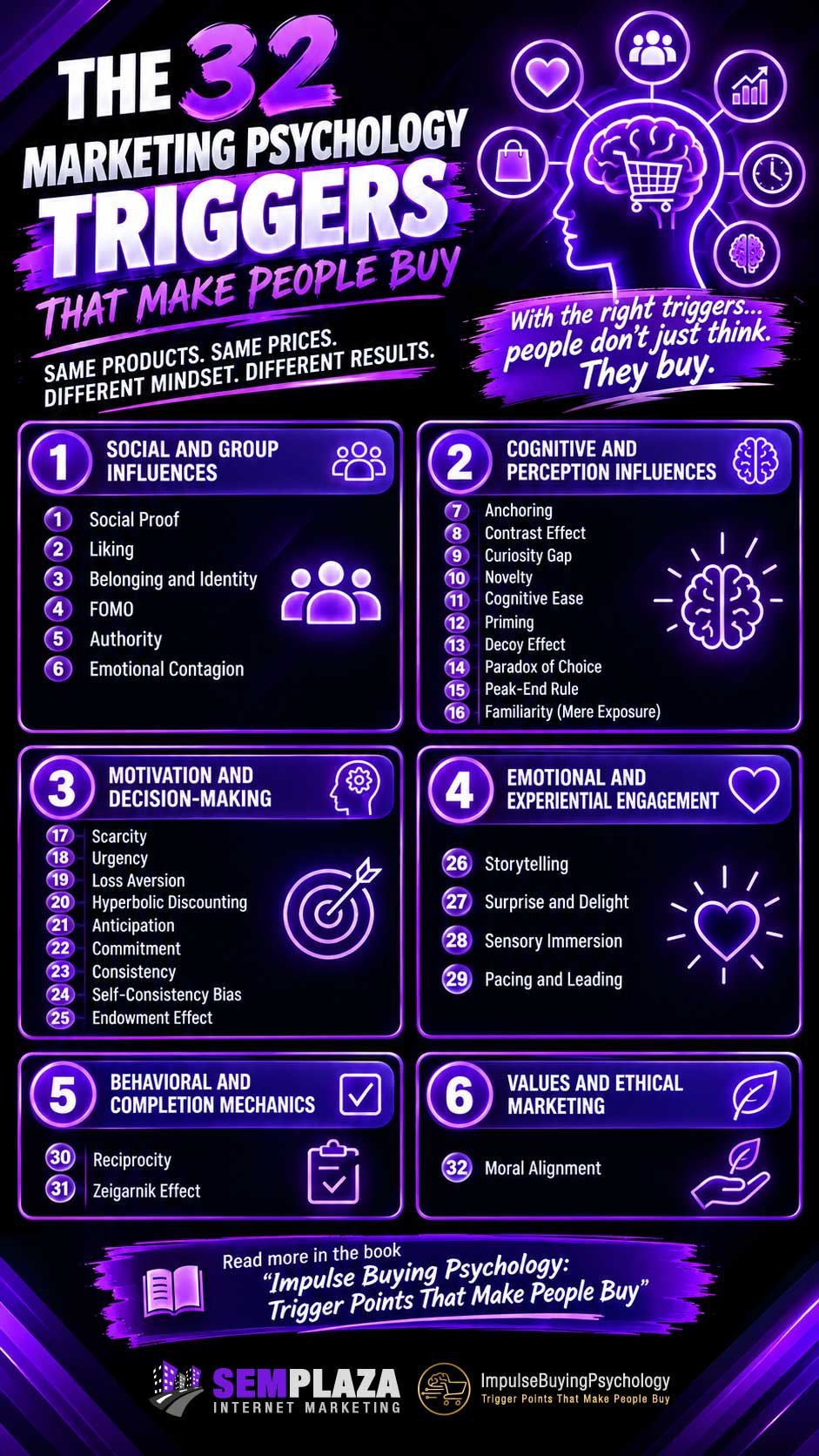
Share this infographic on your site:

Gabi is the founder and CEO of Adurbs Networks, a digital marketing company he started in 2016 after years of building web projects.
Beginning as a web designer, he quickly expanded into full-spectrum digital marketing, working on email marketing, SEO, social media, PPC, and affiliate marketing.
Known for a practical, no-fluff approach, Gabi is an expert in PPC Advertising and Amazon Sponsored Ads, helping brands refine campaigns, boost ROI, and stay competitive. He’s also managed affiliate programs from both sides, giving him deep insight into performance marketing.